Why Improv for Wellbeing?
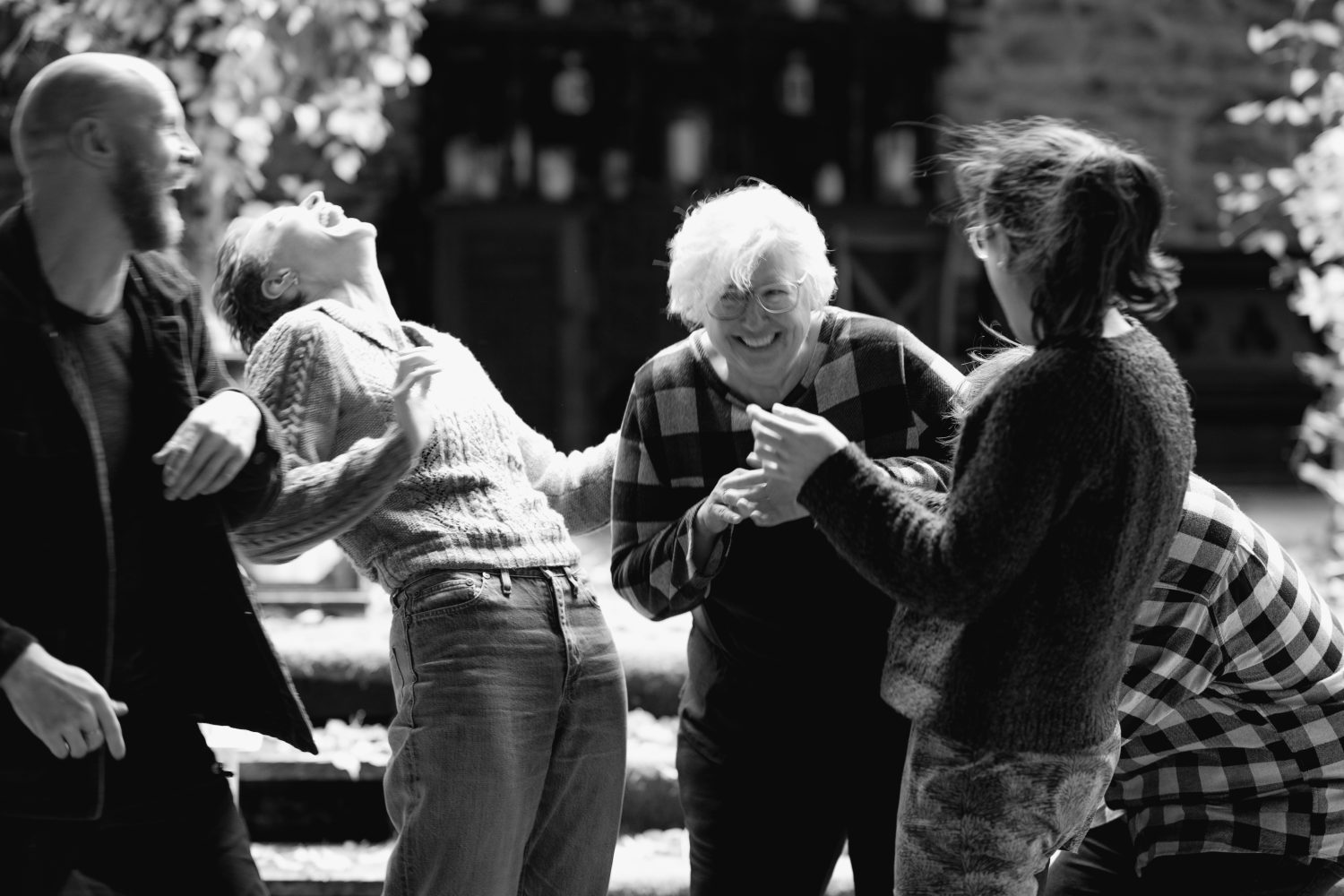
Improvisation is fun and creative and a great social activity, but it’s not just that. It’s also a powerful tool to enhance mental health, boost confidence, reduce anxiety, and build social connections. Backed by a growing body of research, improv has been shown to improve psychological wellbeing, creativity, empathy, and cognitive skills in people of all ages.
Whether you’re looking to reduce stress, improve communication, keep your brain sharp or simply bring more joy, community and spontaneity into your life, improv can help.
Who's Leading The Sessions
I’m Rebecca, an experienced improv teacher and trainer based in Stroud, Gloucestershire and South West England. I’ve been immersed in improv since 2003 and have trained extensively in the UK and the US, including Chicago, the world’s improv capital. You can read more about my journey into improv here.
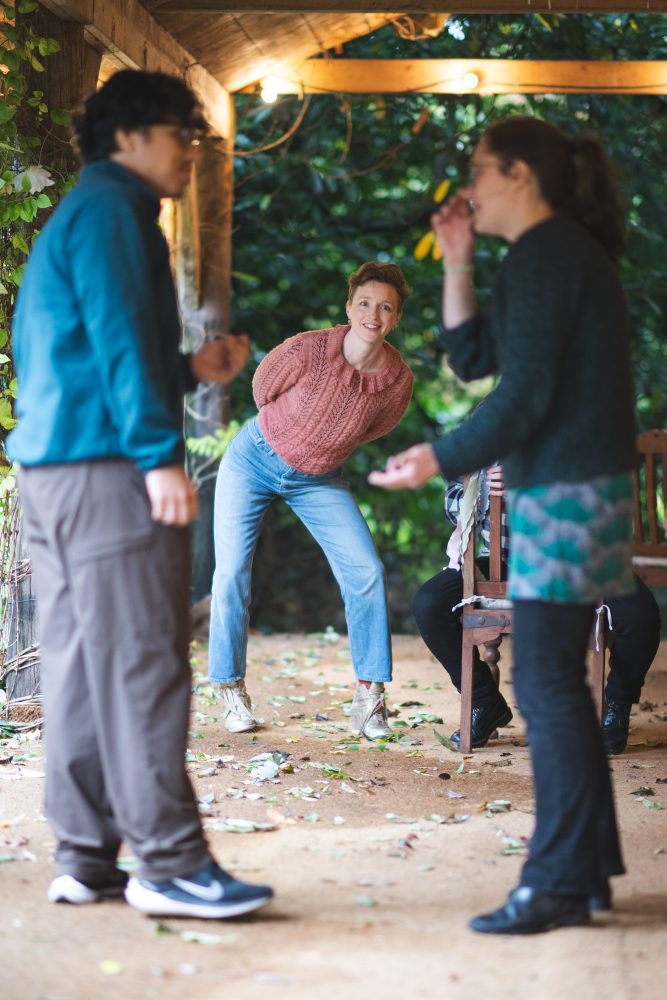
I’m passionate about sharing improv’s wellbeing benefits and have developed my classes to be gentle, supportive, and accessible – whether you’re new to improv or an experienced player.
Over the decades I’ve been teaching I have seen and heard time and time again from my students about how transformative improv can be.
The arts are increasingly understood and used as a powerful way to support people’s health and wellbeing. Our local MP Dr Simon Opher has been one of the pioneers of this, this article from the College of Medicine tells the story of Creative Health in Gloucestershire.
What the Research Says
A summary of recent studies highlights the benefits of improvisational theatre and comedy for wellbeing:
| Study (Author, Year) | Key Findings | |
| Felsman et al., 2020, USA | Improv boosts divergent thinking, uncertainty tolerance, and positive affect | |
| Keisari et al., 2024, Global | Improves wellbeing, social connectedness, and cognitive skills in older adults | |
| Berkemeyer et al., 2025, Germany | Increases creative self-efficacy and self-esteem over time | |
| Schwenke et al., 2020, Germany | Enhances creativity and psychological wellbeing | |
| Asher et al., 2021, USA | Improves quality of life and reduces anxiety, depression, loneliness (breast cancer survivors) | |
| Reid-Wisdom & Perera-Delcourt, 2020, UK | Supports personal growth, focus, and external wellbeing | |
| Keates & Beadle-Brown, 2023, UK | Benefits creativity, acceptance, mental health, and social skills across neurotypes | |
| Neel et al., 2021, USA | Improves wellbeing, engagement, and communication in medical students | |
| Gao et al., 2018, Global | Enhances empathy, resilience, teamwork, and comfort with uncertainty |
These findings, and many more, show how improv’s playful, collaborative nature fosters emotional and social wellbeing.
Improv gives back what you put in and it’s the perfect way to boost confidence, break out of your shell, and step out of your head, all while having fun. – TIM
Get Involved
Improv for wellbeing classes will be launching soon. If you’d like to be the first to hear about dates, special events, or to discuss bespoke workshops for your community, workplace or organisation, please get in touch below.
Join the waitlist!